Thinking about giving your kitchen a fresh new look without the cost of a full remodel? Learning how to paint kitchen cabinets is one of the most effective and budget-friendly ways to transform your space. If you’re here, you’re likely wondering whether it’s worth the effort, what materials you need, and how to get a smooth, professional finish that actually lasts.
This guide walks you through the entire process—from prep and priming to choosing the right paint and avoiding common mistakes—so you can feel confident before you pick up a brush. We’ve researched industry best practices, compared product recommendations, and analyzed proven DIY techniques to ensure the steps you follow are practical, efficient, and durable.
By the end, you’ll know exactly how to approach your cabinet project, what to avoid, and how to achieve a clean, modern result that upgrades your kitchen without draining your budget.
From Dated to Dazzling: A Step-by-Step Guide to a Flawless Cabinet Finish
You could hire a pro—or roll up your sleeves. The difference comes down to process.
First, consider the trade-offs:
| Step | Quick DIY | Professional-Grade Approach |
|—|—|—|
| Prep | Light sanding | Deep clean, degrease, full scuff sand |
| Primer | Skip or budget | Bonding, stain-blocking primer |
| Paint | Wall paint | Cabinet-grade enamel |
| Finish | Brush/roller | Spray or fine microfiber |
At first glance, shortcuts save time. However, skipping prep causes peeling within a year (a common complaint, per Consumer Reports). To paint kitchen cabinets properly, meticulous prep is non-negotiable. Ultimately, method beats speed every time.
The Foundation of a Pro Finish: Meticulous Preparation and Disassembly
A flawless finish doesn’t start with paint—it starts with preparation. If you plan to paint kitchen cabinets, what you do before opening the can determines whether your results look factory-smooth or obviously DIY.
Systematic Disassembly is step one. Remove every door, drawer, and hinge. Label each piece with a simple numbered masking tape system so reassembly is effortless (future you will be grateful). Keep hardware in matching, labeled bags to avoid the classic “mystery screw” problem.
Next, build a controlled workspace:
- Choose a well-ventilated area.
- Clear dust and debris.
- Create a temporary spray shelter with plastic sheeting to control overspray.
Skipping this invites bumps and blemishes. And yes, you’ll wonder later why the finish isn’t glassy.
Critical Cleaning and Degreasing comes next. Soap and water won’t cut through years of invisible grease. Use a TSP (trisodium phosphate) substitute to break down residue that causes paint failure.
Then handle filling and repairs. Apply wood filler to dents and scratches, slightly overfilling each spot. Once dry, sand flush for a seamless surface.
What’s next? After sanding, you’ll need proper priming and dust removal—because even tiny particles can sabotage that pro-level finish.
Sanding and Priming: The Non-Negotiable Steps for Unbeatable Adhesion
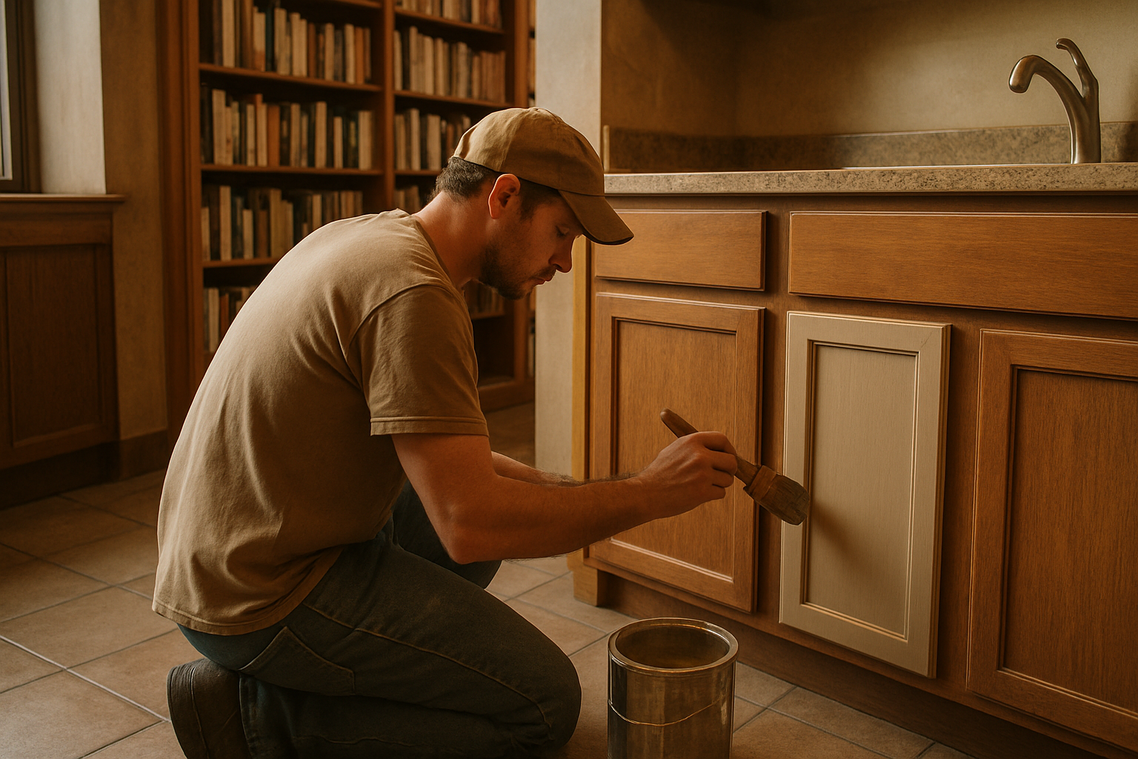
If you skip sanding and priming, you’re not “saving time”—you’re scheduling a redo. Adhesion (the ability of paint to properly stick to a surface) depends on prep. Period.
The Goal of Sanding
You’re not stripping cabinets to bare wood. You’re scuff sanding—creating microscopic scratches so primer has something to grip. Think of it like Velcro at a tiny scale.
Use 120–180 grit sandpaper. That range is aggressive enough to dull a glossy finish but not so rough that it gouges the surface. If you’re planning to paint kitchen cabinets, this step alone determines whether your finish lasts five months or five years.
Some argue deglossers can replace sanding. While liquid deglossers help, they don’t consistently create the mechanical bond that sanding provides. Recommendation: sand anyway.
Dust Removal Is Paramount
Dust is the silent finish killer.
Professional method:
- Vacuum thoroughly (crevices included)
- Wipe with a tack cloth to grab fine particles
Skipping this step leads to gritty texture and weak bonding. (Ever run your hand over a “finished” surface that feels like sandpaper? That’s leftover dust.)
Choose a High-Performance Primer
Not all primers are equal.
- Latex primer: decent, but limited stain blocking
- Shellac-based or oil-based bonding primers: superior adhesion and bleed-through prevention
If you want durability, choose a stain-blocking bonding primer. This is the single most important product decision you’ll make.
Apply Primer the Right Way
Apply two thin coats, not one thick coat. Thick layers trap moisture and cure unevenly.
Lightly sand with 220 grit between coats for an ultra-smooth base.
For a related project, see this step by step guide to building a simple accent wall.
Pro tip: Smooth primer equals flawless paint.
Achieving the Perfect Coat: Selecting and Applying Modern Cabinet Paint
When it comes to cabinets, the tool you choose shapes the final look. A high-quality brush and foam roller can deliver solid results; however, an HVLP (High Volume Low Pressure) sprayer atomizes paint into a fine mist, creating that factory-smooth finish most homeowners want. HVLP simply means the sprayer uses high air volume at low pressure to reduce overspray and improve control. While some argue brushes offer more precision (and less setup), the trade-off is visible texture. If your goal is a brush-stroke-free surface, a sprayer is hard to beat.
Equally important is the coating itself. Traditional latex wall paint lacks the durability cabinets require. Instead, choose waterborne urethane alkyd enamel—a hybrid paint that combines the easy cleanup of water-based products with the hardness of oil-based finishes. These coatings self-level (meaning they smooth out as they dry), helping hide minor imperfections and delivering a tough, chip-resistant cure. That durability matters in high-touch areas like kitchens (think of every time someone grabs a drawer mid-recipe like they’re on a cooking show).
Next, focus on technique. Apply two to three thin coats rather than one heavy coat. Thick layers trap moisture and cause drips. When you paint kitchen cabinets, move the sprayer in steady, overlapping passes, keeping consistent distance. If rolling, use light pressure and finish with long, even strokes.
Finally, respect recoat times listed by the manufacturer. Rushing between coats can cause wrinkling or poor adhesion. In other words, patience isn’t optional—it’s the secret ingredient.
Understanding cure time is crucial. Dry time means the surface feels dry; cure time means the paint has fully hardened. Although cabinets may feel ready in 24 hours, full curing can take 7–30 days. Reassembling too soon is the top reason fresh finishes chip (patience really pays here).
| Stage | What It Means | Safe Action |
|—|—|—|
| Dry | Surface dry | Light touch only |
| Cured | Fully hardened | Reinstall hardware |
Next, carefully reattach hinges using your labels. Add new felt or silicone bumpers. Finally, protect your work: clean with mild soap and water only. Avoid harsh chemicals after you paint kitchen cabinets.
Enjoy your transformed kitchen, built with skill and precision. You now understand what separates a rushed weekend project from a professional-grade finish: preparation, materials, and patience. On one side, hiring a crew delivers speed but drains your budget. On the other, choosing to paint kitchen cabinets yourself demands effort yet rewards you with savings and pride. Moreover, careful sanding versus skipping prep means smooth durability instead of peeling frustration. Likewise, premium primer and paint outperform bargain cans in coverage and longevity. So, reattach that final door, step back, and admire the space you transformed (yes, it’s a little HGTV moment).
Ready to Transform Your Kitchen?
You came here wondering if it’s really possible to paint kitchen cabinets and get results that look smooth, modern, and long-lasting. Now you know it is. With the right prep, the right tools, and a clear step-by-step plan, you can completely refresh your kitchen without the cost of a full renovation.
Outdated cabinets can make your entire space feel tired and uninspiring. But you don’t need to live with chipped finishes, dull colors, or a kitchen that doesn’t reflect your style. Taking action now means turning frustration into a space you’re proud to show off.
Here’s your next step: gather your supplies, choose your color with confidence, and set aside a weekend to get started. Follow the proven process, don’t skip prep, and trust the system.
If you want a kitchen that looks custom without paying contractor prices, now’s the time to act. Thousands of DIYers have already transformed their homes with these techniques—so grab your brush, commit to the process, and start your cabinet makeover today.
 Founder & CEO
Thalira Norvessa is the kind of writer who genuinely cannot publish something without checking it twice. Maybe three times. They came to daily digest through years of hands-on work rather than theory, which means the things they writes about — Daily Digest, Wuta DIY Renovation Techniques, Lifestyle Organization Strategies, among other areas — are things they has actually tested, questioned, and revised opinions on more than once.
That shows in the work. Thalira's pieces tend to go a level deeper than most. Not in a way that becomes unreadable, but in a way that makes you realize you'd been missing something important. They has a habit of finding the detail that everybody else glosses over and making it the center of the story — which sounds simple, but takes a rare combination of curiosity and patience to pull off consistently. The writing never feels rushed. It feels like someone who sat with the subject long enough to actually understand it.
Outside of specific topics, what Thalira cares about most is whether the reader walks away with something useful. Not impressed. Not entertained. Useful. That's a harder bar to clear than it sounds, and they clears it more often than not — which is why readers tend to remember Thalira's articles long after they've forgotten the headline.
Founder & CEO
Thalira Norvessa is the kind of writer who genuinely cannot publish something without checking it twice. Maybe three times. They came to daily digest through years of hands-on work rather than theory, which means the things they writes about — Daily Digest, Wuta DIY Renovation Techniques, Lifestyle Organization Strategies, among other areas — are things they has actually tested, questioned, and revised opinions on more than once.
That shows in the work. Thalira's pieces tend to go a level deeper than most. Not in a way that becomes unreadable, but in a way that makes you realize you'd been missing something important. They has a habit of finding the detail that everybody else glosses over and making it the center of the story — which sounds simple, but takes a rare combination of curiosity and patience to pull off consistently. The writing never feels rushed. It feels like someone who sat with the subject long enough to actually understand it.
Outside of specific topics, what Thalira cares about most is whether the reader walks away with something useful. Not impressed. Not entertained. Useful. That's a harder bar to clear than it sounds, and they clears it more often than not — which is why readers tend to remember Thalira's articles long after they've forgotten the headline.