

Life moves fast, and it’s easy to feel buried under constant notifications, responsibilities, and racing thoughts. If you’ve been searching for a practical way to slow down and regain control, this guide is your starting point. We’ll cut through the noise and show you how simple, effective mindfulness techniques can reduce stress and clear mental clutter. Rooted in established principles and translated into a no-nonsense framework for modern life, this article focuses on action. You won’t just learn what mindfulness is—you’ll discover exactly how to use mindfulness exercises to build focus, ease anxiety, and feel more present each day.
What Is Mindfulness and Why Does It Matter for Mental Well-Being?
Incorporating simple mindfulness exercises into your daily routine can create a serene foundation for your day, making it easier to tackle everything from your morning coffee to applying Kitchen Efficiency Hacks That Save Time Every Day.
Mindfulness is the practice of paying attention to the present moment on purpose, without judgment. That’s it. No incense or mountaintop retreats required (unless that’s your thing). It simply means noticing your thoughts, emotions, and surroundings as they are—without labeling them good or bad.
The Science-Backed Benefits
Research shows mindfulness can:
- Lower cortisol, the body’s primary stress hormone (American Psychological Association)
- Improve emotional regulation by strengthening the prefrontal cortex (Harvard Health)
- Enhance focus and working memory
In practical terms, this means fewer knee-jerk reactions and more thoughtful responses.
From Surviving to Thriving
Many people live in reaction mode—pinged by notifications, deadlines, and worries. Mindfulness shifts you into intentional mode. Try simple mindfulness exercises like focusing on your breath for one minute or noticing five things you can see. Small pauses build calm resilience over time.
Technique 1: The Foundational Power of Mindful Breathing
I used to underestimate breathing exercises. (I mean, I was breathing anyway—how hard could it be?) Then, during a particularly chaotic week, I tried sitting still for three minutes and simply noticed my breath. It felt awkward at first, but by day five, I realized I was snapping at fewer people and sleeping better. That’s when it clicked: the breath is an anchor—a stable point of focus that keeps you grounded in the present moment.
Think of it as your built-in reset button, available anytime, anywhere—no app, cushion, or incense required.
Step-by-Step Guide:
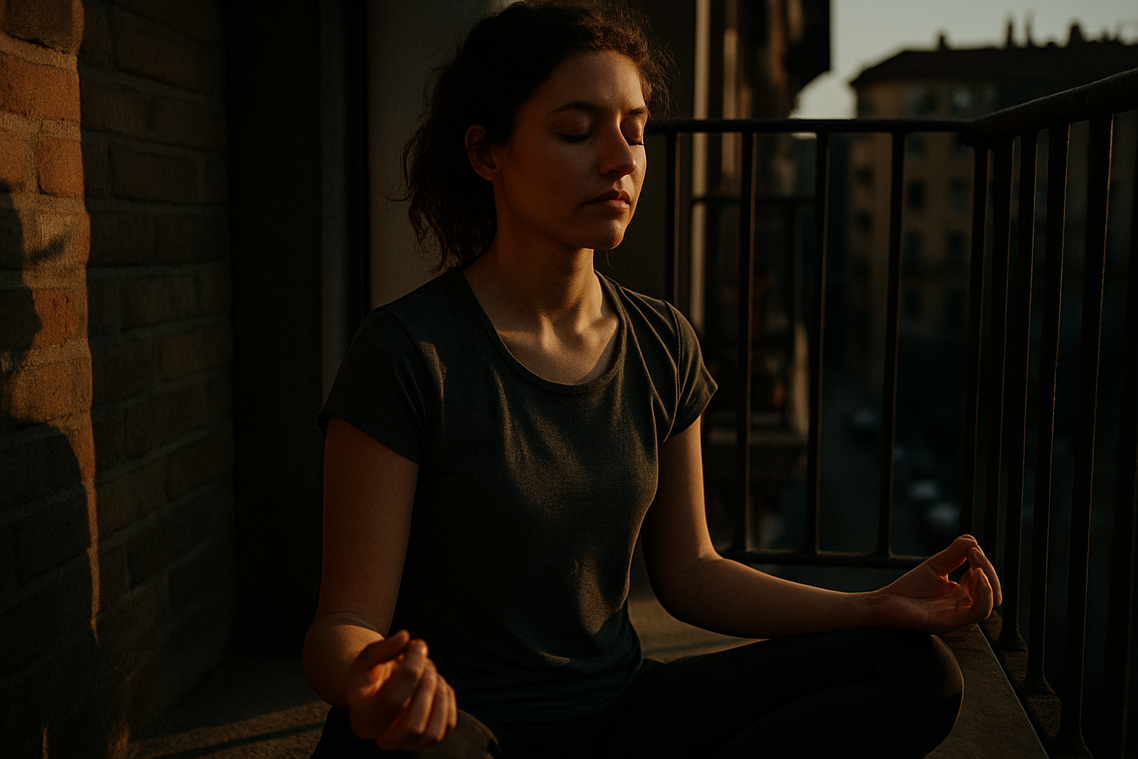
- Find a comfortable seated position, back straight but relaxed.
- Close your eyes or soften your gaze.
- Bring your full attention to the physical sensation of your breath—the air entering your nostrils, the rise and fall of your chest.
- When your mind wanders (which it will), gently acknowledge the thought and guide your focus back to your breath without criticism.
When I catch my mind replaying conversations like a broken record, this simple reset helps.
- Start with just 3–5 minutes a day.
- Consistency beats duration.
Small practice. Real shift.
Technique 2: Reconnecting with the Body Scan Meditation
Stress doesn’t just live in your thoughts—it settles into your shoulders, tightens your jaw, and knots your stomach. This is the mind-body connection, the scientifically supported link between emotional states and physical sensations (American Psychological Association). In other words, your body keeps score—even when your brain tries to “push through.”
That’s where the body scan comes in. It’s one of the simplest mindfulness exercises for rebuilding awareness and releasing stored tension.
How to Perform a Body Scan
First, lie down comfortably on your back. Let your arms rest naturally at your sides.
Next, bring your attention to your toes. Notice any sensations—warmth, coolness, tingling—without needing to change them. (Yes, even if all you notice is “nothing.” That counts.)
Then, slowly move your awareness upward: feet, ankles, legs, torso, arms, hands, neck, and face. Spend 30–60 seconds on each area. If your mind wanders—totally normal—gently guide it back.
For example, if you notice tight shoulders after a long workday, simply observe the tension instead of immediately stretching. Awareness often softens it naturally.
The purpose isn’t relaxation on demand. It’s observation without judgment. Over time, this builds awareness you can apply daily—just like learning how to plan your day for maximum efficiency requires noticing where your time actually goes.
Pro tip: Practice before sleep to improve body awareness and rest quality.
Mindfulness in Motion: Weaving Awareness into Your Daily Routine
When most people hear mindfulness, they picture meditation cushions and silent rooms. However, research suggests the benefits extend far beyond formal practice. A 2018 study published in Behaviour Research and Therapy found that informal mindfulness—bringing awareness to daily activities—significantly reduced stress and rumination (Gu et al., 2018). In other words, you don’t need incense or an hour of silence to feel calmer.
Still, some skeptics argue that multitasking is simply more efficient. After all, who has time to focus on washing dishes? Yet neuroscience tells a different story: constant task-switching increases cognitive load and mental fatigue (American Psychological Association). Slowing down, even briefly, can actually sharpen focus (counterintuitive, but true).
Mindful Moments to Try:
Mindful Eating: Pay full attention to one meal. Notice the colors, smells, textures, and flavors of your food without distractions like TV or your phone.
Mindful Walking: On your next walk, focus on the sensation of your feet on the ground and the environment around you.
Mindful Chores: While washing dishes, feel the warmth of the water and the texture of the sponge. Turn a mundane task into a moment of calm focus.
Over time, these small shifts compound. Think of it as upgrading your operating system—quietly, steadily, effectively.
Building Your Toolkit for Lasting Mental Clarity
You came here looking for a way to quiet the noise and regain control over a busy, distracted mind. Now you have a practical toolkit to begin that journey with confidence. The real challenge was never a lack of desire for calm—it was not knowing how to interrupt the cycle of stress and mental overload. With consistent, gentle practice, you can train your brain to respond with awareness instead of reactivity.
Mental clarity isn’t built in a single breakthrough moment. It’s built in small, daily decisions to return your attention to the present. That’s how focus strengthens and emotional balance follows.
Here’s your next step: choose one technique and practice it for just five minutes today. Start small, stay consistent, and protect your peace. If mental clutter has been holding you back, now is the time to take control—commit to your five minutes and begin building the clarity you deserve.
 DIY & Smart Living Specialist
Alico Erbyons has opinions about smart living hacks. Informed ones, backed by real experience — but opinions nonetheless, and they doesn't try to disguise them as neutral observation. They thinks a lot of what gets written about Smart Living Hacks, Knowledge Corner, Lifestyle Organization Strategies is either too cautious to be useful or too confident to be credible, and they's work tends to sit deliberately in the space between those two failure modes.
Reading Alico's pieces, you get the sense of someone who has thought about this stuff seriously and arrived at actual conclusions — not just collected a range of perspectives and declined to pick one. That can be uncomfortable when they lands on something you disagree with. It's also why the writing is worth engaging with. Alico isn't interested in telling people what they want to hear. They is interested in telling them what they actually thinks, with enough reasoning behind it that you can push back if you want to. That kind of intellectual honesty is rarer than it should be.
What Alico is best at is the moment when a familiar topic reveals something unexpected — when the conventional wisdom turns out to be slightly off, or when a small shift in framing changes everything. They finds those moments consistently, which is why they's work tends to generate real discussion rather than just passive agreement.
DIY & Smart Living Specialist
Alico Erbyons has opinions about smart living hacks. Informed ones, backed by real experience — but opinions nonetheless, and they doesn't try to disguise them as neutral observation. They thinks a lot of what gets written about Smart Living Hacks, Knowledge Corner, Lifestyle Organization Strategies is either too cautious to be useful or too confident to be credible, and they's work tends to sit deliberately in the space between those two failure modes.
Reading Alico's pieces, you get the sense of someone who has thought about this stuff seriously and arrived at actual conclusions — not just collected a range of perspectives and declined to pick one. That can be uncomfortable when they lands on something you disagree with. It's also why the writing is worth engaging with. Alico isn't interested in telling people what they want to hear. They is interested in telling them what they actually thinks, with enough reasoning behind it that you can push back if you want to. That kind of intellectual honesty is rarer than it should be.
What Alico is best at is the moment when a familiar topic reveals something unexpected — when the conventional wisdom turns out to be slightly off, or when a small shift in framing changes everything. They finds those moments consistently, which is why they's work tends to generate real discussion rather than just passive agreement.