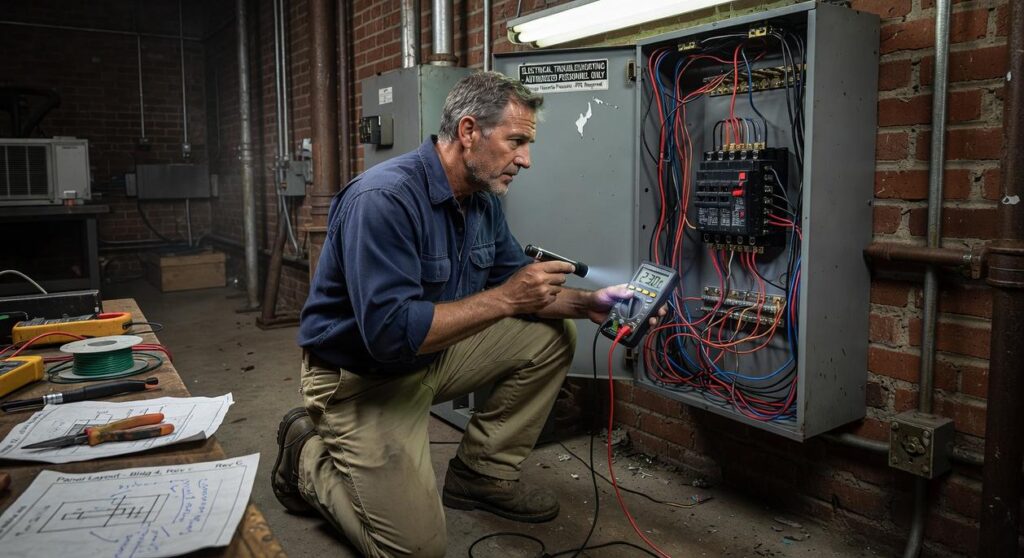

A non-working electrical outlet is more than a minor inconvenience—it can signal a deeper electrical issue that needs prompt attention. This guide to electrical outlet troubleshooting walks you through a safe, step-by-step process to identify the most common causes, starting with the simplest fixes before moving to more complex possibilities. You’ll learn how professionals methodically diagnose a dead outlet, helping you determine whether it’s a quick DIY solution or time to call a licensed electrician. With a safety-first approach, this article ensures you can confidently test and assess your outlet without putting yourself, your wiring, or your home at risk.
The Essential Safety Toolkit: What You Need Before You Start*
Before touching any outlet, assembling the right tools isn’t optional—it’s the line between careful DIY and unnecessary risk. Think of it as Suiting Up vs. Winging It. One keeps you safe; the other is how small mistakes turn into ER visits.
Non-Contact Voltage Tester vs. Guesswork
A non-contact voltage tester detects live current without touching wires. Guessing if a breaker is off? That’s like assuming a stove is cool because the flame’s gone. (Spoiler: it might not be.)
Outlet/Receptacle Tester vs. Trial and Error
This plug-in device uses indicator lights to confirm power and wiring accuracy. During electrical outlet troubleshooting, it quickly reveals issues like reversed polarity or open grounds—no dismantling required.
Insulated Screwdrivers vs. Standard Tools
Insulated handles reduce shock risk if you contact a live component. Regular metal shafts offer zero forgiveness.
Flashlight or Headlamp vs. Phone Light
Dedicated lighting keeps both hands free and visibility sharp—because shadows and breaker panels don’t mix well.
Level 1 Troubleshooting: The Most Common (and Easiest) Fixes

When an outlet stops working, most people panic. “Do we need an electrician?” someone inevitably asks. Not so fast. With electrical outlet troubleshooting, the smartest move is to start simple.
“Always check the obvious first,” a contractor once told me. “You’d be surprised how often it’s something small.”
Step 1: Check the Appliance
Before blaming the outlet, test the device. Unplug it and try a different outlet you know works. If it powers on, your appliance is fine.
Also, look for a wall switch. Some outlets are switch-controlled (yes, even in living rooms). “I thought it was broken,” a homeowner once said, “but my kid flipped the switch off.” It happens.
Step 2: Reset the GFCI Outlet
A GFCI (Ground Fault Circuit Interrupter) is a safety device that shuts off power when it detects imbalance in electrical current. According to the U.S. Consumer Product Safety Commission, GFCIs significantly reduce electrocution risk in wet areas.
Look for outlets with:
- A “TEST” button
- A “RESET” button
Press “RESET” firmly. Remember, one GFCI can control multiple downstream outlets.
Step 3: Check the Circuit Breaker
Head to your electrical panel. If a breaker sits between ON and OFF, reset it fully OFF, then back ON.
If it trips again immediately, stop. That signals a deeper wiring issue.
Some argue you should skip straight to a professional. Fair point—electricity isn’t forgiving. But starting here often saves time, money, and stress (like learning simple ways to seal drafty windows and save on energy bills before calling a contractor). Pro tip: If breakers trip repeatedly, document which appliances were running to help diagnose overloads.
Level 2 Diagnostics: Interpreting Your Outlet Tester
If the simple fixes didn’t work, your outlet tester is the next step in electrical outlet troubleshooting. This small plug-in device uses a pattern of indicator lights to reveal wiring problems behind the wall (yes, it’s basically a mood ring for your outlet).
Reading the Lights: The legend printed on the tester explains each light combination. Here’s what the most common results actually mean and what you should do next:
-
No Lights: This confirms no power is reaching the outlet. The issue likely traces back to a tripped breaker, a GFCI outlet upstream, or a loose connection in the circuit. Start at your panel and work backward.
-
Correct Wiring: If the tester shows correct wiring but your appliance still doesn’t run, the outlet’s internal contacts may be worn out. Over time, these metal contacts loosen and stop gripping plugs firmly. Replacement is usually the fix.
-
Open Ground: The outlet isn’t connected to the grounding system. Grounding is a safety pathway that redirects stray electricity. Without it, you increase shock risk, especially for sensitive electronics.
-
Open Neutral: The neutral wire (which carries current back to the panel) has likely come loose. This is a common failure point and stops the circuit from completing.
-
Hot/Neutral Reversed: The wires are swapped. This is dangerous because devices may appear off but still carry live voltage.
Pro tip: Always turn off the breaker and verify power is off before removing an outlet cover. Safety first, curiosity second.
I once ignored a faint burning smell in my kitchen, assuming it was just last night’s toast crumbs. Minutes later, the outlet plate felt hot to the touch (never a good sign). That experience taught me that some warning signs aren’t suggestions—they’re stop signs.
Your safety comes first. During electrical outlet troubleshooting, stop immediately if you notice:
- Burning smells or scorch marks: Melting plastic or discoloration signals overheating and potential fire risk (NFPA notes electrical failures are a leading cause of home fires).
- Buzzing or crackling sounds: These often mean arcing—electricity jumping gaps—which can ignite nearby materials.
- A breaker that won’t reset: If it trips instantly, you likely have a short circuit requiring professional diagnosis.
- Aluminum wiring: Silver-colored wires demand specialized connectors and handling.
- Personal discomfort: If your gut says stop, listen.
In other words, this isn’t a “DIY hero moment” (leave that to superhero movies). Call a licensed electrician and protect your home.
Take Control of Your Home’s Electrical Safety
You started this guide looking for clear answers to frustrating outlet issues — and now you have a practical, step‑by‑step process to solve them. By applying a structured approach to electrical outlet troubleshooting, you can rule out simple GFCI or breaker trips, interpret outlet tester results accurately, and confidently spot warning signs that require a licensed electrician.
Electrical problems are stressful because they’re unpredictable — and potentially dangerous. Guesswork isn’t a safe strategy.
If you’re still unsure or facing recurring outlet failures, don’t risk your safety. Get a qualified professional to inspect the issue and restore safe, code‑compliant power to your home today.
 Head of Content & Lifestyle Strategist
Ask Williamen Glaseroller how they got into home solutions and fixes and you'll probably get a longer answer than you expected. The short version: Williamen started doing it, got genuinely hooked, and at some point realized they had accumulated enough hard-won knowledge that it would be a waste not to share it. So they started writing.
What makes Williamen worth reading is that they skips the obvious stuff. Nobody needs another surface-level take on Home Solutions and Fixes, Smart Living Hacks, Lifestyle Organization Strategies. What readers actually want is the nuance — the part that only becomes clear after you've made a few mistakes and figured out why. That's the territory Williamen operates in. The writing is direct, occasionally blunt, and always built around what's actually true rather than what sounds good in an article. They has little patience for filler, which means they's pieces tend to be denser with real information than the average post on the same subject.
Williamen doesn't write to impress anyone. They writes because they has things to say that they genuinely thinks people should hear. That motivation — basic as it sounds — produces something noticeably different from content written for clicks or word count. Readers pick up on it. The comments on Williamen's work tend to reflect that.
Head of Content & Lifestyle Strategist
Ask Williamen Glaseroller how they got into home solutions and fixes and you'll probably get a longer answer than you expected. The short version: Williamen started doing it, got genuinely hooked, and at some point realized they had accumulated enough hard-won knowledge that it would be a waste not to share it. So they started writing.
What makes Williamen worth reading is that they skips the obvious stuff. Nobody needs another surface-level take on Home Solutions and Fixes, Smart Living Hacks, Lifestyle Organization Strategies. What readers actually want is the nuance — the part that only becomes clear after you've made a few mistakes and figured out why. That's the territory Williamen operates in. The writing is direct, occasionally blunt, and always built around what's actually true rather than what sounds good in an article. They has little patience for filler, which means they's pieces tend to be denser with real information than the average post on the same subject.
Williamen doesn't write to impress anyone. They writes because they has things to say that they genuinely thinks people should hear. That motivation — basic as it sounds — produces something noticeably different from content written for clicks or word count. Readers pick up on it. The comments on Williamen's work tend to reflect that.