
That high-pitched creak every time you open or close a door isn’t just annoying — it’s a sign that something needs attention. If you’re searching for a simple way to stop door squeaking, you’re likely looking for fast, practical solutions that actually work without calling in a professional.
This article delivers exactly that. We’ll walk you through the most common causes of squeaky doors, from dry hinges to loose hardware, and show you step-by-step fixes using tools and supplies you probably already have at home. You’ll also learn preventative tips to keep the noise from coming back.
Our recommendations are based on tried-and-tested home maintenance methods and practical DIY experience, ensuring the solutions are safe, affordable, and effective. By the end, you’ll have everything you need to silence that squeak for good — quickly, confidently, and without unnecessary hassle.
That high-pitched squeak at 2 a.m. is the kind of tiny problem that feels enormous. “Did you hear that?” my neighbor whispered, glaring at the hallway door. The culprit is simple: friction in the hinges, where metal grinds on metal. Good news? You can stop door squeaking with the right lubricant, not just any greasy spray. As one hardware clerk told me, “Use silicone or white lithium—skip cooking oil.” Precision beats panic.
• Clean the hinge pins first.
• Apply a thin, even coat.
Choose correctly, and that door will glide smoothly (finally) without another midnight complaint from anyone nearby.
Why Your Doors Squeak: Uncovering the Root Cause
The main culprit is simple: friction. When a door moves, the metal hinge pin rotates inside the hinge knuckle. Over time, that metal-on-metal contact creates resistance—and that high-pitched squeak you hear during a quiet moment (usually at the worst possible time). Understanding this helps you fix the problem faster instead of guessing.
Debris makes things worse. Dust, dirt, rust, and grime slowly grind away the factory lubricant, turning smooth movement into a gritty scrape. Think of it like sand in your shoes—small particles, big irritation. Clearing buildup is often all it takes to stop door squeaking and restore peace.
Environmental shifts also play a role. Humidity and temperature changes cause materials to expand and contract, tightening hinges and increasing friction.
Finally, everyday wear and tear matters. Older or heavily used doors develop worn hinge pins, making noise more likely. The benefit? Once you know the cause, the fix becomes quick, affordable, and satisfying.
Choosing the Right Lubricant: A Pro’s Guide to Hinge Solutions
I still remember the first time I tried to stop door squeaking in my hallway. I grabbed whatever was under the sink, gave the hinge a hopeful spray, and… made it worse. The noise stayed, and now there was an oily drip on the trim (lesson learned). Since then, I’ve tested just about every hinge solution out there.
Silicone Spray: The All-Purpose Champion
If hinges had a reliable best friend, it would be silicone spray. This is a clear-drying lubricant—meaning it leaves behind a slick protective layer without visible residue. Because it repels moisture, it also helps prevent rust (a major cause of hinge friction, according to corrosion studies from NACE International). Even better, it’s safe on wood and plastic trim. For interior doors, it’s my go-to.
White Lithium Grease: The Heavy-Duty Option
On the other hand, exterior doors and garage doors need muscle. White lithium grease is a thick, petroleum-based lubricant that clings to metal and resists water. It’s durable, which makes it ideal for heavy gates exposed to rain and temperature swings. Some argue it’s overkill indoors—and they’re right. Inside, it can look messy. Outside, it’s a workhorse.
3-in-1 Oil / Household Lubricating Oil: The Classic Choice
This traditional penetrating oil seeps into tight spaces, loosening grime while lubricating. It’s versatile and easy to find. However, it can drip and attract dust over time. Pro tip: use sparingly and wipe excess immediately.
Graphite Lubricant: The Lock Specialist
Finally, graphite lubricant is a dry, powdered lubricant. Unlike greasy options, it won’t gum up delicate lock mechanisms. It’s perfect for locks—not just hinges—especially in colder climates where oils can thicken.
And if you’re tackling other small home fixes, check out how to fix a leaky faucet without calling a plumber.
The 5-Minute Fix: A Step-by-Step Application Guide
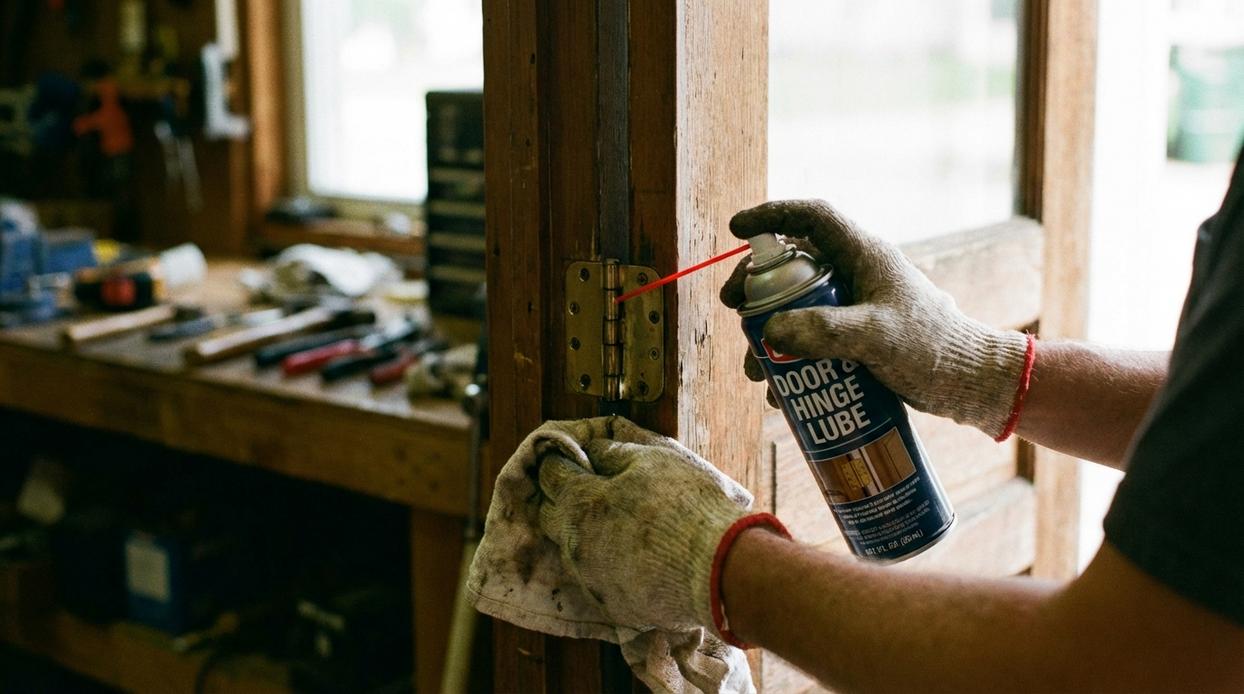
If you live in a humid climate like coastal Florida or the Pacific Northwest, hinge squeaks aren’t just annoying—they’re practically seasonal. Moisture sneaks into metal joints, rust forms, and suddenly every late-night snack run sounds like a horror movie sound effect. Here’s how to stop door squeaking quickly and cleanly.
Step 1 – Preparation
Gather your materials: lubricant (silicone spray or white lithium grease), paper towels, a hammer, and a nail or flathead screwdriver. Slide a paper towel under the hinge to catch drips—especially helpful if you’ve got hardwood floors common in newer suburban builds.
Step 2 – Lift the Hinge Pin
Tap the bottom of the hinge pin upward using your nail and hammer. Work on one hinge at a time to keep the door aligned (contractors call this maintaining “hinge integrity”).
Step 3 – Clean the Pin and Hinge
Wipe away grime and oxidation. In older homes with brass-plated hardware, you’ll often see dark residue—that’s normal surface corrosion.
Step 4 – Apply the Lubricant
Lightly coat the hinge pin. Don’t overspray. A thin film reduces friction without attracting dust (a common issue in desert climates like Arizona).
| Lubricant Type | Best For | Notes |
|---|---|---|
| Silicone Spray | Indoor doors |
Low residue |
| White Lithium Grease | Exterior/heavy doors | Longer-lasting |
Step 5 – Reassemble and Test
Slide the pin back, tap it flush, and swing the door several times. Wipe excess. Quiet, smooth, done. (Your midnight fridge trips are officially stealth mode.)
Household “Fixes” to Avoid: What Not to Put on Your Hinges
I once tried to stop door squeaking with whatever was under my kitchen sink. Big mistake. The squeak left for a week—then came back louder (like it had something to prove).
First, the WD-40 myth. Yes, WD-40 is a water displacer—meaning it pushes moisture away—and it’s a solid cleaner. But it’s not a long-term lubricant. It can strip away existing grease and, over time, attract dust. The result? That squeak returns, sometimes worse than before.
Then there are cooking oils like olive or vegetable oil. They seem harmless, but they oxidize—basically reacting with air—and turn rancid and gummy. That sticky buildup traps dirt and can even attract pests.
Petroleum jelly sounds smarter. It does lubricate, initially. However, it’s thick and acts like a magnet for dust, hair, and grime. Eventually, you get a sludge-filled hinge (think less “home upgrade,” more “DIY horror sequel”).
In short, quick fixes often create longer problems.
Enjoy the Silence: Long-Term Care for Smooth Doors
In short, the fix isn’t complicated: clean the hinge thoroughly and apply the correct lubricant. That simple pairing is what finally makes it possible to stop door squeaking for good.
As a result, you get the real reward—a door that glides open quietly, no wince, no cringe, just smooth motion (like a scene change in a well-edited film). While others suggest quick sprays and hope, long-term care means checking hinge pins for grime buildup and choosing silicone or lithium grease over temporary fixes.
Check and lubricate your other high-use doors today now.
For a smoother home experience, tackling noisy, sticking doors can be an essential part of your maintenance routine, especially when combined with strategies from our guide on Decluttering Your Home Room by Room: A Practical Action Plan.
Finally Enjoy a Quiet, Smooth-Closing Door
You came here because that constant creak every time the door opens or closes was driving you crazy. Now you know exactly what causes it, how to fix it, and how to prevent it from coming back.
A squeaky door isn’t just a small annoyance. It interrupts quiet moments, wakes sleeping kids, and makes your home feel older than it is. The good news? You don’t need expensive tools or professional help to stop door squeaking for good. With the right lubricant, a quick hinge clean-up, and a few simple adjustments, you can restore peace to your space in minutes.
Don’t let that irritating sound linger another day. Take five minutes right now, grab your supplies, and fix the problem at its source.
If you want more fast, practical home hacks that actually work, explore our top-rated DIY guides trusted by thousands of homeowners looking for simple, stress-free solutions. Your quieter, smoother home starts with one small fix — make it today.
 DIY & Smart Living Specialist
Alico Erbyons has opinions about smart living hacks. Informed ones, backed by real experience — but opinions nonetheless, and they doesn't try to disguise them as neutral observation. They thinks a lot of what gets written about Smart Living Hacks, Knowledge Corner, Lifestyle Organization Strategies is either too cautious to be useful or too confident to be credible, and they's work tends to sit deliberately in the space between those two failure modes.
Reading Alico's pieces, you get the sense of someone who has thought about this stuff seriously and arrived at actual conclusions — not just collected a range of perspectives and declined to pick one. That can be uncomfortable when they lands on something you disagree with. It's also why the writing is worth engaging with. Alico isn't interested in telling people what they want to hear. They is interested in telling them what they actually thinks, with enough reasoning behind it that you can push back if you want to. That kind of intellectual honesty is rarer than it should be.
What Alico is best at is the moment when a familiar topic reveals something unexpected — when the conventional wisdom turns out to be slightly off, or when a small shift in framing changes everything. They finds those moments consistently, which is why they's work tends to generate real discussion rather than just passive agreement.
DIY & Smart Living Specialist
Alico Erbyons has opinions about smart living hacks. Informed ones, backed by real experience — but opinions nonetheless, and they doesn't try to disguise them as neutral observation. They thinks a lot of what gets written about Smart Living Hacks, Knowledge Corner, Lifestyle Organization Strategies is either too cautious to be useful or too confident to be credible, and they's work tends to sit deliberately in the space between those two failure modes.
Reading Alico's pieces, you get the sense of someone who has thought about this stuff seriously and arrived at actual conclusions — not just collected a range of perspectives and declined to pick one. That can be uncomfortable when they lands on something you disagree with. It's also why the writing is worth engaging with. Alico isn't interested in telling people what they want to hear. They is interested in telling them what they actually thinks, with enough reasoning behind it that you can push back if you want to. That kind of intellectual honesty is rarer than it should be.
What Alico is best at is the moment when a familiar topic reveals something unexpected — when the conventional wisdom turns out to be slightly off, or when a small shift in framing changes everything. They finds those moments consistently, which is why they's work tends to generate real discussion rather than just passive agreement.